What do F1, F1b and F1BB mean?
F1 is a first cross, F1b is a backcross, and F1BB commonly means a second backcross, often an F1b doodle bred to a Poodle. These labels do not guarantee coat, health or allergy outcomes.
"F1," "F1b," and "F1BB" are terms used to describe the breeding of designer dog breeds, such as Goldendoodles, Labradoodles, and Bernedoodles. The "F" stands for "filial," which refers to the generation of the hybrid, and the number following the "F" indicates the generation of breeding. Here's what each term means:
F1: An F1 hybrid is the first generation of breeding between two purebred dogs of different breeds. For example, an F1 Goldendoodle is produced by breeding a purebred Golden Retriever with a purebred Poodle.
F1b: An F1b hybrid is produced by breeding an F1 hybrid back to one of its parent breeds. For example, an F1b Goldendoodle can come from an F1 Goldendoodle and a Poodle. The particular pairing affects expected ancestry, but does not guarantee a coat type or allergy outcome.
F1BB: This commonly describes a second backcross, such as an F1b Goldendoodle bred to a Poodle. It does not mean breeding two F1b Goldendoodles together. Ask for the actual pedigree, because generation labels alone do not establish shedding, health or allergy safety.
It's important to note that these terms are used primarily in breeding designer dog breeds and may not apply to other hybrid dog breeds. The specific traits and characteristics of an individual dog will depend on various factors, including the breeds of the parents, the genetic makeup of the individual dog, and the environment in which the dog was raised.
Are these doodles hypoallergenic?
No dog is guaranteed allergy safe. Doodles and Poodles can trigger allergies, regardless of their coat or how much they shed.
Doodles, including Aussiedoodles, Goldendoodles and Cockadoodles, vary in coat and shedding. No dog is guaranteed allergy safe. A lower shedding coat does not establish that a dog produces fewer allergens or will not trigger a reaction.
Poodles also produce allergens. Proteins associated with dander, saliva and urine can trigger symptoms, and neither hair length nor the amount of shedding establishes allergy safety. Crossing a Poodle with another breed does not remove this risk.
Every person’s allergies are different. Speak with an allergist before choosing a dog if you have dog allergies or asthma. Meeting a particular dog may inform the discussion, but a short visit without symptoms cannot guarantee future tolerance.
What type of payment methods do you accept?
We prefer Zelle or cash and also accept Venmo and Cash App. Confirm the applicable payment fees with us before paying.
We prefer Zelle (bank to bank) or cash but also accept Venmo and Cash app ($25 fee per $1000 applies).
Can I return my dood?
Yes, a dood can be returned to us at any age. Any reimbursement depends on the timing and circumstances.
Yes. Our doods can be returned to us anytime, regardless of age. Timing and reason for returning them are important factors determining any reimbursement for your return. There is a process of psychological decompression and vetting required to incorporate them back into our home. We will never condone or assist you in “re homing” them. They are a lifelong commitment to us.
Is my deposit refundable?
Deposits are not refundable. Applying a deposit to a future litter is considered case by case.
No, the deposit reserves your specific dood. The deposit can be applied to a future litter. This is determined on a case by case basis.
Do you ship?
We can discuss shipping or meeting you at Austin Bergstrom International Airport. Confirm the current arrangements, requirements and costs with us before booking travel.
We can ship via cargo but prefer for you to fly into Austin Bergstrom International Airport (ABIA) and we will bring your dood to the airport to fly back with you!
Do you offer grooming?
Emily offers baths and sanitary trims for dogs she has bred, for an additional fee and subject to availability.
I groom all of my own and offer baths/sanitary trims for your doods for an additional cost! Based on availability.
Will my doods color change?
Yes, a puppy’s coat color can change as it grows. The amount of change depends on the individual dog and cannot be guaranteed.
Coat color can change as a puppy grows. Fading and other changes depend on genetics and age, and even black coats can change. A puppy’s current color is not a permanent color guarantee.
Do you provide additional training?
An additional 1-2 weeks of puppy training may be available for an extra fee, with collection at around 9-10 weeks. Ask about the current schedule.
New parents don't always feel comfortable bringing their new dood home at eight weeks old. I provide 1-2 weeks of puppy training if you prefer to take them home at 9-10 weeks for an additional cost. Based on availability.
Are your doods registered?
Our doodles are not registered as AKC recognized purebred breeds. Mixed dogs may be eligible for separate programs such as AKC Canine Partners; confirm the actual puppy’s records with us.
Our doodles are not registered as AKC recognized purebred breeds. The original purebred parents are registered. AKC also offers separate programs such as Canine Partners for eligible mixed dogs, which is different from purebred registration. Ask us about the actual puppy’s records.
Can I leave my doods tail and/or dewclaws intact?
Tell us before a litter is born or immediately at birth if you want the tail and dewclaws left intact. Discuss the individual puppy’s arrangements directly with us.
If you'd like to leave your doods tail and/or dewclaws intact, this can be accommodated when you put a deposit for a future litter or when they are born. This procedure happens at three days old.
Are the parents healthy?
Our adult dogs receive health or genetic testing and veterinary monitoring. Ask for the specific parents’ available reports; screening cannot guarantee lifelong health.
Our adult dogs receive health or genetic testing and veterinary monitoring. Ask which screening and genetic tests were completed for the particular parents and request the available reports. Testing cannot eliminate every health risk or guarantee a puppy’s lifelong health. Our breeding program reflects years of experience, but experience does not replace evidence of individual results. Our genetics program is our intellectual property.
What is the temperament of the parents?
Our parent dogs live with us and participate in family life and training. Ask about the particular parents rather than assuming all puppies will have the same temperament.
All of our dood’s parents have been raised by us, and we try not to leave the house without 1 or 5! They are our hiking companions and entertainment, and they love the car and couch! They eat with us, sleep with us, and attend social events with us! They've completed multiple training courses and love learning new things.
How long will it take for my dood to adjust?
Some puppies start settling in within 2-3 weeks, but adjustment varies and may continue for months. Follow the individual puppy’s pace.
Some puppies start to feel more at home within 2-3 weeks, but adjustment is individual and can continue over months. Provide a predictable routine, patient reward based training and a quiet place to rest. Ask a veterinarian or qualified trainer if behavior or health concerns arise.
Does hypoallergenic mean my dood won’t shed?
No. Low shedding and allergy safety are different things. All dogs produce allergens, and no breed label guarantees that a dog will not trigger a reaction.
No. Low shedding describes loose hair, not allergy safety. All dogs produce allergens associated with dander, saliva and urine. Neither a breed name nor a low shedding coat guarantees that a dog will not cause an allergic reaction.
What is a guardian home?
A guardian family provides a home for a breeding dog under an agreement with the breeder. Confirm ownership, breeding arrangements and financial responsibilities in writing.
A guardian home is where a dog is placed temporarily with a designated family for breeding. The dog remains the breeder's property and is used for breeding purposes, with the guardian home providing a loving and stable environment for the dog.
In a guardian home program, the breeder selects families willing to provide a loving home for one of their breeding dogs. The dog lives with the guardian family, receives proper care and attention, and is used for breeding when needed. The breeder remains responsible for veterinary care and other expenses, but the guardian home provides the dog a loving and stable environment.
The use of guardian homes is every day in breeding high quality dogs, such as purebred dogs and designer dog breeds, as it allows the breeder to control the environment in which their dogs live carefully and ensure that they receive proper care and attention. It also provides a way for families who love dogs to become involved in the breeding process and to provide a loving home for a breeding dog.
It's essential to work with a reputable breeder who has a well established guardian home program and is committed to their breeding dogs' health and well being. The breeder should be transparent about their breeding program, expectations for the guardian home, and responsibilities for the dog's care.
What is a Miniature Aussiedoodle?
A Miniature Aussiedoodle has Australian Shepherd and Miniature Poodle ancestry. Adult size, coat and temperament vary, so ask about the parents and the specific litter.
Miniature Aussiedoodles are crossbreed dog that results from breeding an Australian Shepherd and a Miniature Poodle. Miniature Aussiedoodles typically weigh between 20 and 40 pounds and stand between 13 and 18 inches tall at the shoulder. They are a designer breed known for their intelligence, loyalty, and affectionate nature.
Miniature Aussiedoodles can be active and need regular exercise, training and mental stimulation. Their coat may be wavy or curly, but shedding and allergy reactions vary. No dog is guaranteed allergy safe. Individual personality and learning affect family suitability.
It's essential to remember that Miniature Aussiedoodles, like all crossbreed dogs, can inherit traits from both of their parent breeds, so it's important to research both breeds to get a good idea of what to expect in terms of personality, appearance, and health, as with any breed, working with a reputable breeder and providing your Miniature Aussiedoodle with proper nutrition, exercise, training, and veterinary care is essential.
What is a Miniature Goldendoodle?
A Miniature Goldendoodle has Golden Retriever and Poodle ancestry. GANA’s miniature category typically weighs 26-35 pounds, but commercial use of “mini” and individual estimates vary.
A Miniature Goldendoodle has Golden Retriever and Poodle ancestry, often involving a Miniature Poodle. Many are social, affectionate and responsive to training, but individual temperament and shedding vary. No dog is guaranteed allergy safe.
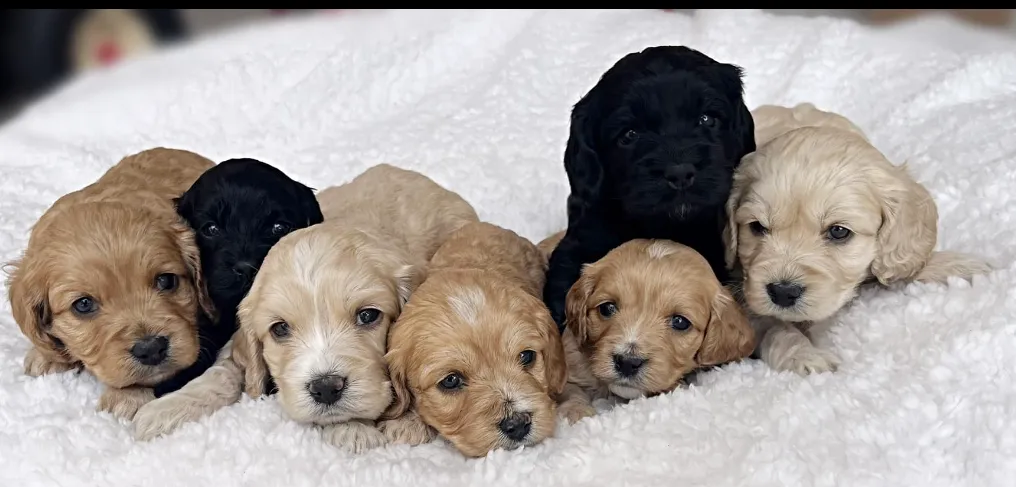
Size labels vary between breeders. GANA’s miniature category is over 14 but under 17 inches at the shoulder and typically 26-35 pounds. The older 15-30 pound estimate describes a different broad use of “mini,” not a guaranteed size for an Em’s Doods puppy. Ask about the actual parents and pairing. Coats can include cream, apricot, red and black.
Miniature Goldendoodles are generally very active and enjoy playing, walking, and exploring. They also tend to be highly trainable and make great family pets. However, it's important to remember that every dog is unique and individual, and their personality and behavior can be influenced by many factors, including genetics, environment, and training.
What is a miniature Cockadoodle?
A Miniature Cockadoodle, also called a Cockapoo, has Cocker Spaniel and Miniature Poodle ancestry. Size varies, and grooming, exercise and training remain important.
A Miniature Cockapoo is a crossbreed dog that is created by breeding a Miniature Poodle with a Cocker Spaniel. Cockapoos are known for being friendly, affectionate, and highly adaptable, which makes them great family pets. Miniature Cockapoos are smaller in size than the standard Cockapoos, with an average weight range of 15 to 20 pounds and a height of about 11 to 13 inches at the shoulder.
Miniature Cockapoos can have black, cream, red, brown or silver coats. Shedding varies and they are not guaranteed allergy safe. Many respond well to patient reward based training, but progress depends on the individual dog and consistent practice.
These dogs are active and enjoy playing, walking, and exploring. They are generally good with children and other pets and make great companions for individuals or families. However, as with any breed, it's important to remember that every dog is unique and their personality and behavior can be influenced by many factors, including genetics, environment, and training.
Are AussieDoodles good family dogs?
Aussiedoodles can suit active families with time for training, exercise and mental enrichment. Individual temperament matters, and children and dogs should always be supervised together.
Yes, AussieDoodles can be great family dogs! They are known for their affectionate and social personalities, making them great companions for families with children and other pets. AussieDoodles are typically friendly, playful, and easy going, and they tend to get along well with people and other animals.
However, it's important to keep in mind that every dog is unique and may have different personalities and temperaments. Additionally, while AussieDoodles are generally good with children, it's important to supervise interactions between dogs and children to ensure the safety of both.
AussieDoodles are also highly trainable and intelligent dogs that enjoy learning and pleasing their owners. With proper training and socialization, they can learn a variety of tricks and commands and make great family pets.
Overall, AussieDoodles can be great family dogs as long as they receive proper exercise, training, and socialization, and as long as their individual personalities and needs are taken into consideration. It's always a good idea to work with a professional dog trainer and a veterinarian to determine the best care plan for your AussieDoodle.
Are Goldendoodles good family dogs?
Goldendoodles can be affectionate family companions when their exercise, grooming and training needs fit the household. No breed guarantees child compatibility or allergy safety.
Yes, Goldendoodles are often considered good family dogs. They are known for their friendly, affectionate, and intelligent nature, and they tend to be great with children. They are also highly adaptable, making them well suited to life in a variety of household environments, including homes with both large and small yards.
Goldendoodle shedding varies, and no dog is guaranteed allergy safe. They often enjoy playing, walking and exploring. Many respond well to reward based training, but learning takes consistent practice and depends on the individual dog.
It's important to remember that every dog is unique, and their personality and behavior can be influenced by many factors, including genetics, environment, and training. So while Goldendoodles are generally considered good family dogs, it's still important to research the breed thoroughly and make sure that it is the right fit for your family's lifestyle and living conditions.
Are Cockadoodles good family dogs?
Cockadoodles can be social family companions, but each dog has different needs. Plan regular care and training, and supervise interactions with children.
Yes, Cockapoos are often considered good family dogs. They are known for their friendly, affectionate, and highly adaptable nature, making them well suited to life in various household environments. Cockapoos are often good with children and other pets and make great companions for individuals or families.
Cockapoo shedding varies, and no dog is guaranteed allergy safe. They often enjoy playing, walking and exploring. Many respond well to reward based training, but progress depends on the individual dog and consistent practice.
It's important to remember that every dog is unique, and many factors, including genetics, environment, and training, can influence their personality and behavior. So while Cockapoos are generally considered good family dogs, it's still essential to research the breed thoroughly and ensure it fits your family's lifestyle and living conditions.
Where is Horseshoe Bay Texas?
Em’s Doods is based in Horseshoe Bay, Texas, in the Texas Hill Country near Lake Lyndon B. Johnson. Contact us directly to arrange any visit.
Horseshoe Bay is a resort town located in Llano County, Texas, in the United States. It is situated on Lake Lyndon B. Johnson's banks, a man made lake in the Texas Hill Country region. Horseshoe Bay is known for its beautiful scenery, recreational activities, and upscale homes, and it is a popular destination for those seeking a quiet, serene lifestyle. The town is approximately 45 miles northwest of Austin, Texas, and 85 miles north of San Antonio, Texas.